Monday, March 22, 2021
2020-21 Lesson 14: Electrical Circuits
2020-21 Lesson 13: Rainbows
Rainbows are formed when light shines through water, like when the sun shines through the rain. This light is bent and reflected, like a reflection in a mirror, and this causes all of the amazing colors that you see.
The light that we see each day is sunlight, a white light that comes to us from the sun. White light is made up of the different colors that we see in the rainbow, but when the light is all traveling in one direction, it looks white.
During the rains, however, millions of raindrops cause the colors in the white light to separate and refract through them. Each raindrop actually makes its own rainbow, but when there are so many raindrops at the same time, the rainbows become big enough for us to see with the naked eye.
Rainbows normally appear from the rain, but they can happen wherever light is being bent inside of water droplets. Rainbows can be seen in mist, fog, spray, and dew.
Rainbows are made up of all seven colors that come from light. These colors are red, orange, yellow, green, blue, indigo, and violet.
A great way to remember these colors is the think of the acronym, which seems like a man’s name: ROY G BIV
There is no end to a rainbow. Even though they look like an arch to us, or an upside down letter U, rainbows are actually full circles.
2020-21 Lesson 12: Water Cycle and States of Matter
Tuesday, February 16, 2021
2020-21 Lesson 11: Habitats and Ecosystems
A habitat is a place where an organism makes its home. A habitat meets all the environmental conditions an organism needs to survive. ... The main components of a habitat are shelter, water, food, and space.
Tuesday, January 19, 2021
2020/21 Lesson 10: The Moon
What would it be like to live on the moon? Maybe one day that will be a reality! But for now it is fun to imagine what it would be like.
Here are some facts we learned about the moon:
The earth and moon rotate together so we always see the same side of the moon. We looked at a model of this in class.
The first men to walk on the moon were Americans named Neil Armstrong and Buzz Aldrin in 1969.
No one has walked on the moon since 1972.
It takes 27.3 days for the moon to orbit the earth.
The phases of the Moon are the different ways the Moon looks from Earth over about a month. As the Moon orbits around the Earth, the half of the Moon that faces the Sun will be lit up. The different shapes of the lit portion of the Moon that can be seen from Earth are known as phases of the Moon.
"The lunar phase or Moon phase is the shape of the Moon's directly sunlit portion as viewed from Earth. The lunar phases gradually change over a synodic month as the Moon's orbital positions around Earth and Earth around the Sun shift." Wikipedia
Finally, we drew the phases of the moon on a cup. As you twist the cup, you can see the different phases. It was so fun to learn about the moon!
2020/21 Lesson 9: The Ocean
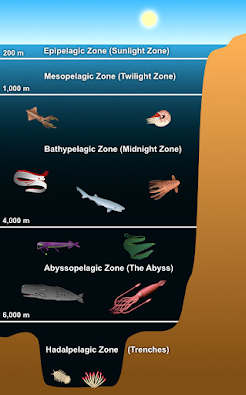
The Ocean is a fascinating place! Did you know that oceans cover over 70% of the earth? Wow! There are 5 oceans on earth: Pacific, Atlantic, Indian, Arctic, and the Southern. Oceans provide 50% of the oxygen on earth, 97% of the water on earth, and provides over 270 billion dollars to the United States. The ocean is used for transportation, recreation, and is home to over one million species of animals.
We looked at pictures and videos of many sea creatures. Sharks are always the most popular answer when asked what creatures live in the ocean. So, we had to spend a little more time discussing sharks!
Mark Rober videos are always a hit! Watch his shark blood videos to see if sharks are attracted to blood from a mile away. Click on this link: Can sharks smell blood?
Tuesday, January 5, 2021
2020/21 Lesson 8: Camouflage
Animals camouflage to blend into their surroundings. Camouflage is a defense tactic that animals and organisms use to disguise their appearance. Usually it helps them blend into their surroundings. Animals use camouflage to mask their location, identity, and movement. This allows prey to avoid predators and for predators to sneak up on prey. We saw some pictures and videos of animals that camouflage so well, we couldn't find them!
We played a game called "Hiding in plain sight" where we camouflaged paper moths. Students created a moth by coloring it to look like a place in the classroom. We hid the moths in the room and then had to find where they were hidden.